Opens in a new tab

Is ACL Reconstruction worth it for active individuals

  • Articles
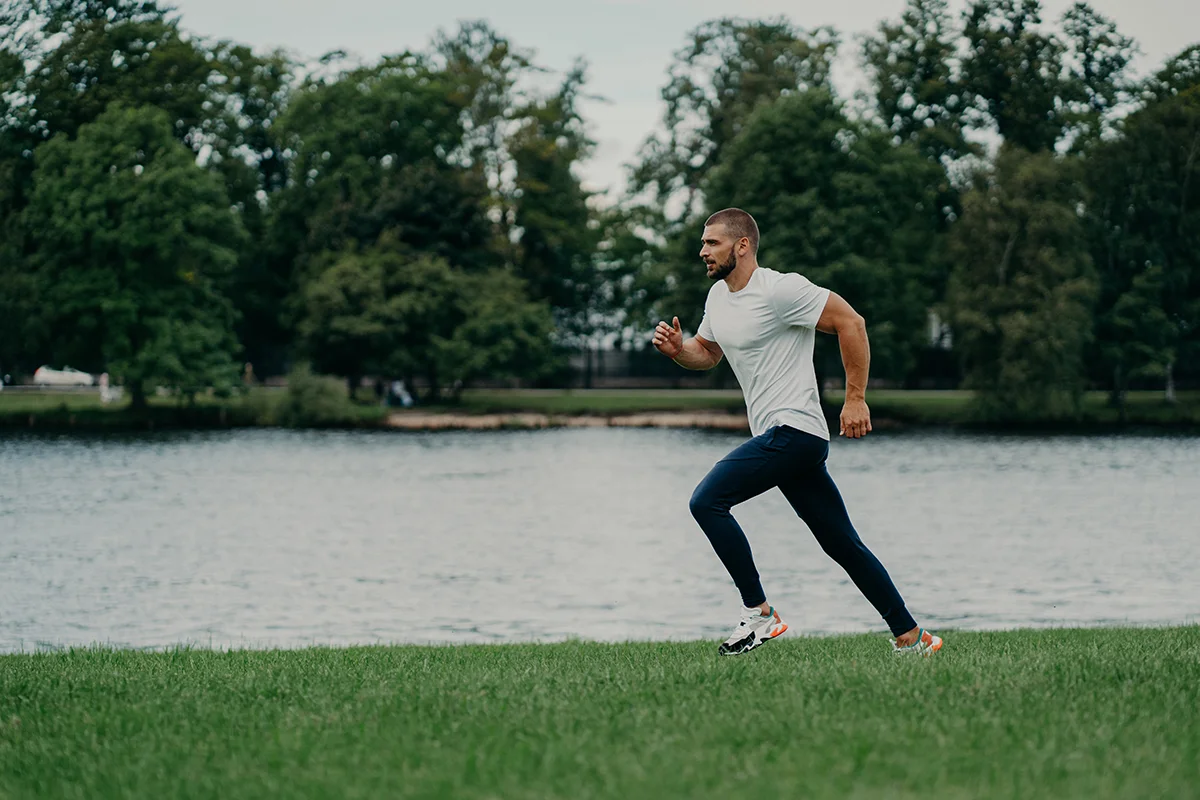
ACL Recosntruction worth it for active individuals - man running on grass near lake

A pivot, an awkward landing, or a sudden change of direction can turn a normal day or season into a difficult question: is ACL reconstruction worth it? For active people, the answer is rarely just about an MRI finding. It is about whether your knee feels trustworthy when you ski, coach, work on uneven ground, play with your children, or return to the sport that matters to you.

An anterior cruciate ligament, or ACL, tear affects the knee’s ability to control rotation and forward movement of the shinbone. Some people can build enough strength and movement control to function well without surgery. Others experience repeated giving-way episodes despite excellent rehabilitation. The best choice depends on your goals, the stability of your knee, associated injuries, and your willingness to commit to recovery.

What ACL reconstruction is designed to solve

ACL reconstruction replaces the torn ligament with a graft, most often tissue from your own body or a carefully screened donor graft. The graft is positioned to restore stability while your body gradually incorporates it. It is not a quick repair, and it is not simply a matter of replacing one piece of tissue. Successful reconstruction combines precise surgery, protection of the healing graft, progressive strengthening, and sport-specific retraining.

The primary goal is to reduce instability. When the knee repeatedly buckles or shifts, the risk is not limited to a frightening moment on the field. Those episodes can damage the meniscus or joint cartilage, structures that are central to long-term knee health. For patients with a highly unstable knee, reconstruction can be a joint-preservation decision as much as a return-to-sport decision.

That said, an ACL tear does not automatically require surgery. A person who does not participate in pivoting or cutting activities, has no instability during daily life, and is willing to modify certain activities may do very well with a focused rehabilitation program. Choosing nonsurgical care is an active treatment decision, not doing nothing.

Is ACL reconstruction worth it for your goals?

The most useful question is not whether reconstruction is worthwhile in general. It is whether the potential benefits outweigh the demands and risks for the life you want to lead.

Reconstruction is often worth serious consideration for athletes who want to return to sports involving cutting, pivoting, jumping, or unpredictable contact. Think soccer, basketball, football, lacrosse, skiing, tennis, or many forms of mountain recreation. It may also be appropriate for people whose jobs require climbing, carrying, working on uneven terrain, or making quick directional changes.

Persistent instability is another major factor. If your knee gives way while walking, descending stairs, turning quickly, or trying to resume training, strengthening alone may not provide the stability you need. Recurrent buckling should not be ignored, especially if it is accompanied by swelling, catching, or pain after an episode.

Associated injuries can shift the balance toward surgery as well. A repairable meniscus tear, damage to the cartilage surface, or injury to other knee ligaments may need to be addressed at the same time. Preserving the meniscus and cartilage whenever possible is especially important for active patients who want to protect their natural knee over decades, not simply get through the next season.

Age alone does not decide the issue. A motivated 45-year-old skier may have more to gain from reconstruction than a 19-year-old who is happy to avoid pivoting sports. Activity level, symptoms, anatomy, injury pattern, and personal priorities matter more than a number on a chart.
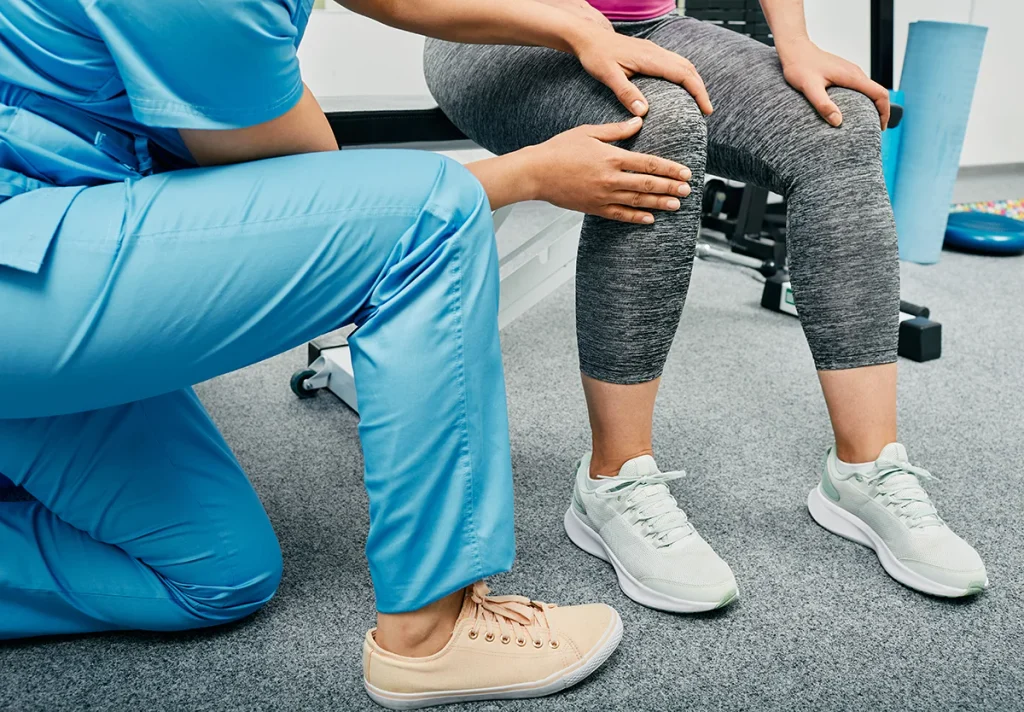
rehabilitation without surgery can be reasonable

When rehabilitation without surgery can be reasonable

A high-quality physical therapy program is valuable whether or not you have surgery. In some cases, it may be the primary treatment. Rehabilitation focuses on restoring full motion, reducing swelling, building quadriceps and hamstring strength, improving balance, and retraining how the hip, knee, and ankle work together during movement.

Nonsurgical care may be a reasonable path when the knee remains stable, there are no major associated injuries requiring surgical treatment, and your preferred activities can be performed without pivoting or repeated instability. Some patients choose a period of structured rehabilitation before making a final surgical decision. This can reduce swelling, restore motion, and reveal how stable the knee feels under gradually increasing demands.

The trade-off is that activity modification may be necessary. A brace can provide some support in selected situations, but it does not recreate the ACL or eliminate the risk of instability. If episodes of giving way continue, it is worth reassessing the plan rather than pushing through an unreliable knee.

The real commitment behind a successful result

ACL reconstruction is a partnership between patient, surgeon, and rehabilitation team. Surgery is one important day. Recovery is the longer process that determines how well the knee performs afterward.

Early goals include controlling swelling, regaining full extension, restoring a normal walking pattern, and gradually rebuilding strength. The timeline varies based on the graft, your baseline conditioning, whether the meniscus or cartilage also required treatment, and how your knee responds to progression. Returning to jogging may occur months before returning to cutting, contact, or competition.

Many athletes need nine months or longer before a return to high-risk pivoting sports is considered. That timing is not arbitrary. The graft needs time to mature, and the rest of the body needs time to recover strength, power, balance, and confidence. Returning based only on the calendar can leave important deficits unaddressed.

A careful return-to-sport plan should assess more than whether the knee feels good. It should consider strength symmetry, landing and movement mechanics, single-leg control, sport-specific tasks, and psychological readiness. Confidence matters, but it should be built on measurable recovery rather than wishful thinking.

Understanding the trade-offs and risks

Most patients pursue ACL reconstruction because they want greater stability and a better chance of returning to valued activity. Still, every surgery has risks. These include infection, blood clots, stiffness, persistent pain, numbness around the incision, graft failure, and the possibility that the knee will not feel exactly as it did before the injury.

There is also no surgery that guarantees prevention of arthritis. The original injury itself, particularly when it includes meniscal or cartilage damage, can affect the knee over time. Reconstruction can help prevent further instability-related injury, but protecting the joint also depends on meniscal preservation, sensible training progression, strength maintenance, body mechanics, and responding early when new symptoms develop.

Graft selection deserves an individualized conversation. Your own tissue may be recommended for many younger or highly active patients, while donor tissue may have a role in selected situations. The right choice depends on sport demands, prior surgeries, anatomy, other injuries, and the recovery considerations that matter most to you.

Questions that make the decision clearer

A consultation should leave you with a plan you understand, not pressure to choose immediately. Ask what other structures were injured, whether your meniscus and cartilage are intact, and what instability means for your specific activities. Discuss the realistic timeline for work, driving, travel, strength training, and sport.

It is also reasonable to ask what success looks like in your situation. For one patient, success may mean returning to competitive soccer. For another, it may mean hiking uneven trails without fear, working comfortably through a long day, or playing a relaxed game of pickleball. A treatment plan should be built around that definition.

At Tracye Lawyer MD, ACL decisions are considered in the larger context of the whole knee, including the meniscus, cartilage, alignment, movement goals, and long-term joint preservation. The goal is not simply to perform a procedure. It is to help you make a well-informed choice and move forward with a recovery plan that respects both your ambitions and your knee.

If your knee feels unstable or your injury has placed the activities you love out of reach, seek a thorough evaluation early. Clear answers about your knee today can help protect the movement you value for years to come.
  • ACL Recosntruction worth it for active individuals - man running on grass near lake

    Is ACL Reconstruction worth it for active individuals

    A pivot, an awkward landing, or a sudden change of direction can turn a normal day or season into a difficult question: is ACL reconstruction worth it? For active people, the answer is rarely just about an MRI finding. It is about whether your knee feels trustworthy when you ski, coach, work on uneven ground, play with your children, or return to the sport that matters to you.

    An anterior cruciate ligament, or ACL, tear affects the knee’s ability to control rotation and forward movement of the shinbone. Some people can build enough strength and movement control to function well without surgery. Others experience repeated giving-way episodes despite excellent rehabilitation. The best choice depends on your goals, the stability of your knee, associated injuries, and your willingness to commit to recovery.

    What ACL reconstruction is designed to solve

    ACL reconstruction replaces the torn ligament with a graft, most often tissue from your own body or a carefully screened donor graft. The graft is positioned to restore stability while your body gradually incorporates it. It is not a quick repair, and it is not simply a matter of replacing one piece of tissue. Successful reconstruction combines precise surgery, protection of the healing graft, progressive strengthening, and sport-specific retraining.

    The primary goal is to reduce instability. When the knee repeatedly buckles or shifts, the risk is not limited to a frightening moment on the field. Those episodes can damage the meniscus or joint cartilage, structures that are central to long-term knee health. For patients with a highly unstable knee, reconstruction can be a joint-preservation decision as much as a return-to-sport decision.

    That said, an ACL tear does not automatically require surgery. A person who does not participate in pivoting or cutting activities, has no instability during daily life, and is willing to modify certain activities may do very well with a focused rehabilitation program. Choosing nonsurgical care is an active treatment decision, not doing nothing.

    Is ACL reconstruction worth it for your goals?

    The most useful question is not whether reconstruction is worthwhile in general. It is whether the potential benefits outweigh the demands and risks for the life you want to lead.

    Reconstruction is often worth serious consideration for athletes who want to return to sports involving cutting, pivoting, jumping, or unpredictable contact. Think soccer, basketball, football, lacrosse, skiing, tennis, or many forms of mountain recreation. It may also be appropriate for people whose jobs require climbing, carrying, working on uneven terrain, or making quick directional changes.

    Persistent instability is another major factor. If your knee gives way while walking, descending stairs, turning quickly, or trying to resume training, strengthening alone may not provide the stability you need. Recurrent buckling should not be ignored, especially if it is accompanied by swelling, catching, or pain after an episode.

    Associated injuries can shift the balance toward surgery as well. A repairable meniscus tear, damage to the cartilage surface, or injury to other knee ligaments may need to be addressed at the same time. Preserving the meniscus and cartilage whenever possible is especially important for active patients who want to protect their natural knee over decades, not simply get through the next season.

    Age alone does not decide the issue. A motivated 45-year-old skier may have more to gain from reconstruction than a 19-year-old who is happy to avoid pivoting sports. Activity level, symptoms, anatomy, injury pattern, and personal priorities matter more than a number on a chart.

    rehabilitation without surgery can be reasonable

    When rehabilitation without surgery can be reasonable

    A high-quality physical therapy program is valuable whether or not you have surgery. In some cases, it may be the primary treatment. Rehabilitation focuses on restoring full motion, reducing swelling, building quadriceps and hamstring strength, improving balance, and retraining how the hip, knee, and ankle work together during movement.

    Nonsurgical care may be a reasonable path when the knee remains stable, there are no major associated injuries requiring surgical treatment, and your preferred activities can be performed without pivoting or repeated instability. Some patients choose a period of structured rehabilitation before making a final surgical decision. This can reduce swelling, restore motion, and reveal how stable the knee feels under gradually increasing demands.

    The trade-off is that activity modification may be necessary. A brace can provide some support in selected situations, but it does not recreate the ACL or eliminate the risk of instability. If episodes of giving way continue, it is worth reassessing the plan rather than pushing through an unreliable knee.

    The real commitment behind a successful result

    ACL reconstruction is a partnership between patient, surgeon, and rehabilitation team. Surgery is one important day. Recovery is the longer process that determines how well the knee performs afterward.

    Early goals include controlling swelling, regaining full extension, restoring a normal walking pattern, and gradually rebuilding strength. The timeline varies based on the graft, your baseline conditioning, whether the meniscus or cartilage also required treatment, and how your knee responds to progression. Returning to jogging may occur months before returning to cutting, contact, or competition.

    Many athletes need nine months or longer before a return to high-risk pivoting sports is considered. That timing is not arbitrary. The graft needs time to mature, and the rest of the body needs time to recover strength, power, balance, and confidence. Returning based only on the calendar can leave important deficits unaddressed.

    A careful return-to-sport plan should assess more than whether the knee feels good. It should consider strength symmetry, landing and movement mechanics, single-leg control, sport-specific tasks, and psychological readiness. Confidence matters, but it should be built on measurable recovery rather than wishful thinking.

    Understanding the trade-offs and risks

    Most patients pursue ACL reconstruction because they want greater stability and a better chance of returning to valued activity. Still, every surgery has risks. These include infection, blood clots, stiffness, persistent pain, numbness around the incision, graft failure, and the possibility that the knee will not feel exactly as it did before the injury.

    There is also no surgery that guarantees prevention of arthritis. The original injury itself, particularly when it includes meniscal or cartilage damage, can affect the knee over time. Reconstruction can help prevent further instability-related injury, but protecting the joint also depends on meniscal preservation, sensible training progression, strength maintenance, body mechanics, and responding early when new symptoms develop.

    Graft selection deserves an individualized conversation. Your own tissue may be recommended for many younger or highly active patients, while donor tissue may have a role in selected situations. The right choice depends on sport demands, prior surgeries, anatomy, other injuries, and the recovery considerations that matter most to you.

    Questions that make the decision clearer

    A consultation should leave you with a plan you understand, not pressure to choose immediately. Ask what other structures were injured, whether your meniscus and cartilage are intact, and what instability means for your specific activities. Discuss the realistic timeline for work, driving, travel, strength training, and sport.

    It is also reasonable to ask what success looks like in your situation. For one patient, success may mean returning to competitive soccer. For another, it may mean hiking uneven trails without fear, working comfortably through a long day, or playing a relaxed game of pickleball. A treatment plan should be built around that definition.

    At Tracye Lawyer MD, ACL decisions are considered in the larger context of the whole knee, including the meniscus, cartilage, alignment, movement goals, and long-term joint preservation. The goal is not simply to perform a procedure. It is to help you make a well-informed choice and move forward with a recovery plan that respects both your ambitions and your knee.

    If your knee feels unstable or your injury has placed the activities you love out of reach, seek a thorough evaluation early. Clear answers about your knee today can help protect the movement you value for years to come.