Table of Contents
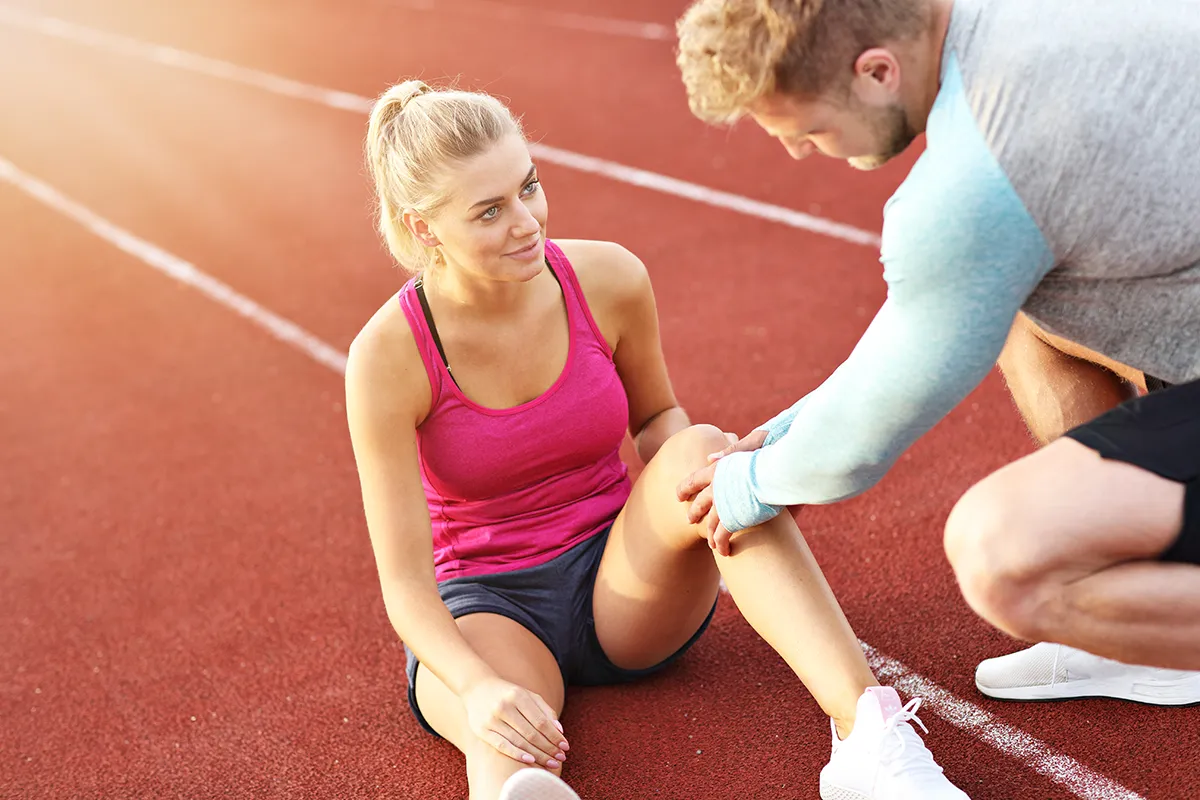
A pivot, an awkward landing, or a sudden stop can change how secure your knee feels in a single moment. Once an ACL injury is diagnosed, most active patients want one answer first: when can I get back? An ACL recovery timeline provides useful guideposts, but the safest return to sport, work, or recreation depends on healing milestones, not simply the date on the calendar.
ACL recovery should protect the repaired tissue while progressively rebuilding motion, strength, balance, and confidence. The goal is not just to walk without pain. It is to return to the movements that matter to you with a knee prepared to handle them.
ACL Recovery Timeline at a Glance
For an appropriate ACL reconstruction, early recovery centers on protecting the ligament and restoring knee motion. Most patients begin guided rehabilitation soon after surgery, then progress through strengthening and controlled functional training over several months. Running, jumping, cutting, and pivoting are introduced only when the knee demonstrates the strength and control to tolerate them.
Many patients can expect a general progression over six to nine months, sometimes longer for return to pivoting or contact sports. That range is not a promise or a deadline. A high school soccer player, a skier, and a person returning to a physically demanding job may all need different preparation, even if their surgeries were similar.
The First Two Weeks: Protect the Repair and Control Swelling
The first days after surgery are often more about management than exercise. Swelling, discomfort, and stiffness are expected, but they should steadily improve with the prescribed plan. Elevation, ice when advised, medication, and early movement all have a role in making this phase more manageable.
A brace and crutches may be used to protect the knee and support safe walking. Weight-bearing instructions vary. Some patients can bear weight with support relatively early, while others need a more cautious approach because of the repair technique or an additional procedure, such as a meniscal repair or cartilage treatment.
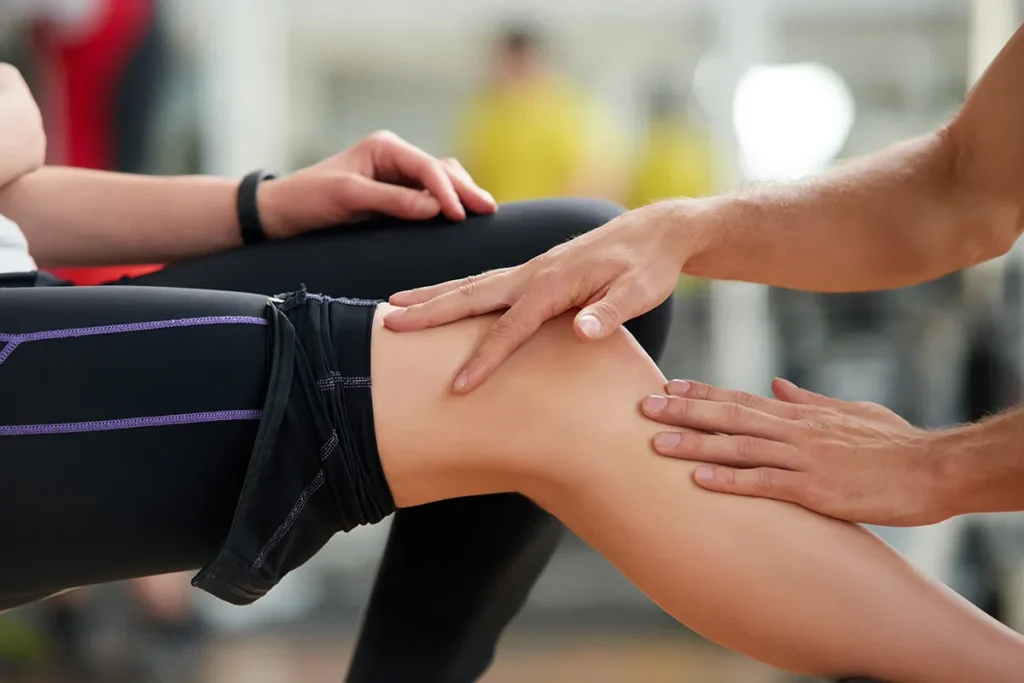
Physical therapy commonly begins with gentle work on knee extension (fully straightening the knee), along with gradual flexion, quadriceps activation, and safe gait mechanics. Regaining full extension is particularly important. A knee that remains slightly bent during walking can reinforce weakness and alter the way you move.
Call your surgical team promptly for worsening calf pain or swelling, chest pain, shortness of breath, fever, drainage, increasing redness around an incision, or pain that is escalating rather than improving. These symptoms are uncommon, but timely evaluation matters.
Weeks Two Through Six: Restore Motion and Build a Foundation
By this stage, the knee should be becoming less swollen and more responsive. Therapy progresses from basic muscle activation toward more deliberate strength work, balance training, and improved walking mechanics. The quadriceps can lose strength quickly after a knee injury and surgery, so restoring its function is a central part of recovery.
The work may include controlled closed-chain exercises, such as mini-squats or step-ups, along with hip and core strengthening. Strong hips and trunk control help keep the knee from collapsing inward during demanding movements. Stationary biking may be added when motion and comfort allow.
This is also when patients can feel tempted to do too much because everyday walking becomes easier. Feeling better is encouraging, but it does not mean the healing ligament is ready for twisting, deep loaded squats, uneven hiking terrain, or a quick return to recreational sports. Protecting the repair during this period supports the durable healing active patients want.
Weeks Six Through 12: Develop Strength, Control, and Confidence
At roughly six to twelve weeks, ACL recovery rehabilitation becomes more functional. The focus shifts toward increasing lower-extremity strength, improving single-leg control, and restoring a normal movement pattern during stairs, squats, and daily activity.
Your therapist may use strength testing, balance drills, and movement assessments to identify side-to-side differences. This is valuable because a patient can feel capable while still relying too heavily on the uninjured leg. Persistent swelling after activity is another useful signal that the knee may not yet be tolerating its current workload.
Some patients return to low-impact fitness activities during this phase, depending on their progress and surgeon’s guidance. Cycling, pool-based exercise, and carefully selected strength training can maintain conditioning without placing the same rotational demands on the ACL as field or court sports.
Months Three Through Five: Prepare for Running and Higher Demand
A return-to-run program is often considered around this window, but clearance should be based on readiness. Before running, the knee should have minimal swelling, near-full range of motion, sound walking mechanics, and sufficient strength and control during single-leg tasks.
Running is not the finish line. It is a new demand that tests the knee repeatedly with every stride. Rehabilitation then advances to deceleration, landing mechanics, lateral movement, and progressively more challenging single-leg exercises. For athletes, this phase begins to resemble preparation for their actual sport rather than general exercise.
The timeline can slow if pain, swelling, loss of motion, or poor movement quality appears. That is not a failure. It is useful feedback. Adjusting training volume early is often wiser than pushing through symptoms and creating a longer setback.
Months Six Through Nine and Beyond: Return to Sport by Criteria
Return to cutting, pivoting, jumping, or contact sports usually requires more than a certain number of months after surgery. A thoughtful return-to-sport decision considers strength, hop or functional testing when appropriate, balance, endurance, movement mechanics, knee stability, and psychological readiness.
A common goal is strong symmetry between the surgical and nonsurgical legs, but the specific tests and benchmarks should be individualized. A skier must tolerate different forces than a tennis player. A construction worker may need safe climbing, carrying, and working on uneven ground. A recreational runner may prioritize mileage tolerance and confidence on hills.
Your care team may recommend a gradual exposure plan rather than an immediate full return. An athlete might begin with straight-line drills, then controlled agility, then noncontact practice, and eventually full practice before competition. This staged approach gives the knee and the athlete time to demonstrate readiness under increasingly realistic conditions.
What Can Change Your ACL Recovery Pace?
No two ACL recoveries are identical. Associated injuries are one of the biggest variables. A meniscal repair, cartilage restoration procedure, or injury to another ligament can require additional protection and alter weight-bearing or range-of-motion restrictions.
Your baseline conditioning, age, sport, job demands, swelling response, and consistency with rehabilitation also matter. Younger athletes may recover quickly in some areas but need especially careful return-to-sport planning because their desired activities often involve high-risk cutting and pivoting. Adults balancing work and family may need a rehabilitation plan that is realistic enough to complete consistently.
Equally important is choosing the right treatment for the injury. Not every ACL tear is a candidate for primary repair. Careful evaluation of the tear location, tissue quality, timing, instability, and associated damage helps determine whether repair, reconstruction, or nonsurgical management offers the best path forward. For a deeper comparison, see our related article on ACL repair vs reconstruction.
How to Support a Stronger ACL Recovery
The most productive approach is steady rather than heroic. Complete the home program as prescribed, attend therapy consistently, and communicate openly about swelling, pain, instability, or difficulty meeting a milestone. Good nutrition, adequate sleep, and avoiding nicotine also support tissue healing.
Keep your focus on the quality of movement, not just the number of repetitions or the amount of weight lifted. A controlled single-leg squat is more informative than forcing through a heavier exercise with poor alignment. If your goal is to return to mountain trails, the court, the slopes, or a physically active career, your rehabilitation should eventually prepare you for those specific demands.
The right ACL recovery timeline is the one that respects biology while moving you forward with purpose. Each restored degree of motion, stronger step, and well-controlled landing is progress toward getting back to the activities that make you feel like yourself.
If you are recovering from an ACL injury, or considering surgery and want a clear, individualized plan, schedule an evaluation with Dr. Tracye Lawyer at Catalyst Orthopaedics & Sports Medicine in Boise.
Learn more about Dr. Tracye Lawyer and her approach to ACL repair and reconstruction.
For additional reliable information on ACL injuries, the American Academy of Orthopaedic Surgeons offers a helpful patient guide: Anterior Cruciate Ligament (ACL) Injuries.
This information is for general education and is not a substitute for medical advice. Every recovery is individual. Talk with your orthopaedic surgeon about your specific diagnosis, procedure, and goals.