
Return to sport after ACL surgery safely

  • Articles
Return to sport after ACL surgery safely

A successful return to sport after ACL surgery is not the day you are cleared to play. It is the result of months of carefully rebuilding strength, movement quality, confidence, and sport-specific capacity. For an active skier, soccer player, basketball athlete, runner, or weekend competitor, the goal is not simply to get back on the field or trail. The goal is to return with a knee prepared for the demands that caused the injury in the first place.

That distinction matters. An ACL reconstruction or repair can restore stability, but the healing graft or repaired ligament still needs time to mature. Meanwhile, the muscles and movement patterns that protect the knee must be retrained. Progressing too quickly can raise the risk of reinjury. Progressing too cautiously without a focused rehabilitation plan can leave an athlete strong enough for daily life but underprepared for cutting, landing, pivoting, or uneven terrain.

Why the Calendar Cannot Make the Decision to Return to sport after ACL surgery safely

Many patients understandably ask, “When can I play again?” The answer depends on the sport, the surgical procedure, any associated meniscus or cartilage treatment, your age, your prior activity level, and how your knee performs during rehabilitation.

A nine-month timeline is often discussed for pivoting sports, and some athletes need longer. That is not a punishment or a sign that recovery is failing. It reflects what we know about ligament healing and the time required to restore the strength and neuromuscular control needed for high-demand activity. Returning at a certain month on the calendar is less meaningful than meeting objective recovery milestones.

The timeline may change if your ACL surgery also included a meniscus repair, cartilage restoration procedure, or treatment for another ligament injury. These procedures can require more protection early in recovery because the repaired tissue needs an environment where it can heal well. In joint preservation, durable healing takes priority over rushing a return date.

The Building Blocks of Return to Sport After ACL Surgery

Rehabilitation should be progressive, individualized, and based on how your knee responds. Early goals typically include controlling swelling, restoring full knee extension, gradually regaining motion, and rebuilding a normal walking pattern. Persistent swelling, loss of extension, or a limp are signals to address before adding impact activities.

As rehabilitation advances, strength becomes central. The quadriceps are especially important because they help control the knee during deceleration, landing, stair descent, and changes in direction. Hip and trunk strength also matter. A stable knee does not work alone – it works as part of the entire lower extremity.

Later phases move beyond traditional strengthening. An athlete needs to demonstrate control during single-leg tasks, jumping, landing, accelerating, and decelerating. For a skier, that may include managing fatigue and variable terrain. For a soccer or basketball player, it includes repeated cuts, pivots, and reactive movements. For a trail runner, it includes downhill control and uneven surfaces.

Your physical therapist and surgeon may use a combination of strength testing, hop testing, movement assessment, range-of-motion measurements, and patient-reported readiness tools. No single test can guarantee safety. Together, these measures provide a clearer picture of whether your knee is ready for the next phase.

Symmetry Is Helpful, but Quality Matters Too

A common benchmark is comparing the surgical leg with the uninjured leg. Symmetry in quadriceps strength and functional testing is valuable, but it should not be the only target. The uninjured leg may also lose strength after surgery, and an athlete can sometimes achieve acceptable numbers while using poor mechanics.

A careful return-to-sport assessment looks at the quality of movement. Does the knee collapse inward when landing? Is there hesitation on the surgical side? Can the athlete absorb force quietly and maintain alignment when tired? These details can reveal risk that a simple strength number may miss.

Confidence Is Part of Physical Recovery

Fear after an ACL injury is common, even in experienced athletes. It may show up as hesitation when cutting, avoiding a jump, or feeling tense in the situations that caused the original injury. This is not a lack of toughness. It is a normal response to a significant injury and surgery.

Confidence returns through exposure to controlled challenges. The rehabilitation program should gradually reintroduce movements that feel meaningful to the athlete: a planned change of direction, then a faster cut, then a reactive drill, then sport practice. Repetition in a structured setting helps the brain trust the knee again.

Honest communication is essential. If your knee feels unstable, repeatedly swells after activity, catches, locks, or develops worsening pain, tell your care team. These symptoms do not automatically mean something is wrong with the reconstruction, but they deserve evaluation rather than being pushed through.
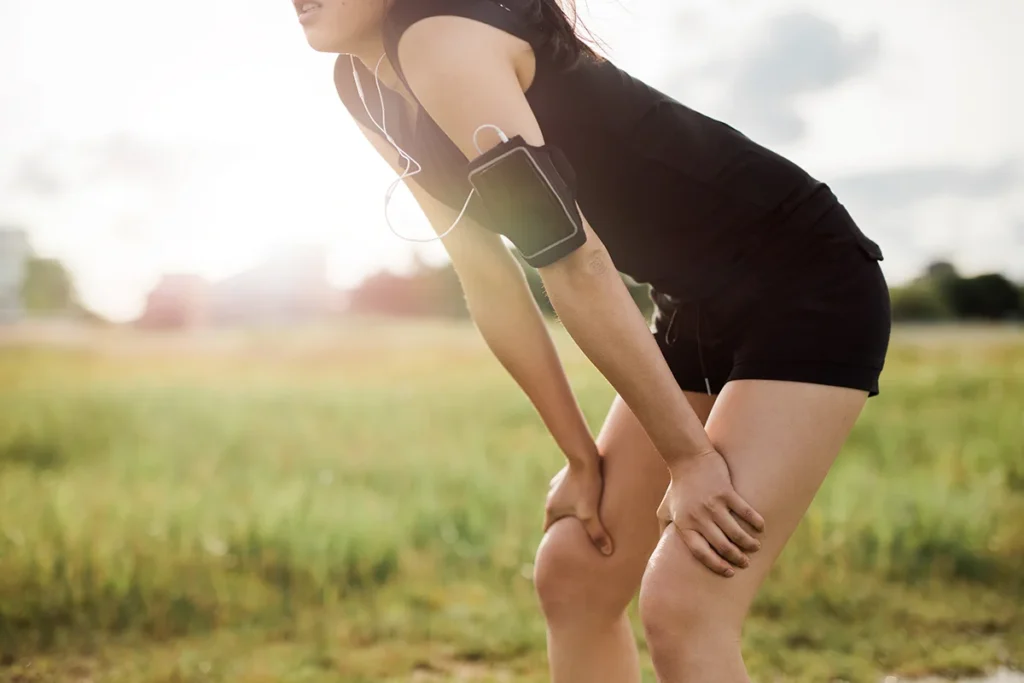
Symmetry Is Helpful, but Quality Matters Too

What a Smart Progression Looks Like

Returning to activity is not an all-or-nothing decision. Most athletes move through a sequence: controlled strengthening and low-impact conditioning, straight-line running when appropriate, plyometrics and agility work, noncontact sport drills, limited practice, full practice, and finally competition. Each step adds physical and psychological demand.

The right pace depends on your response. A knee that remains calm after training – without significant swelling, pain, or loss of motion – is generally handling the workload better than one that is consistently irritated the following day. Mild muscle soreness can be expected as training increases. Joint swelling and worsening instability are different signals.

It also helps to distinguish between returning to participation and returning to performance. You may be medically ready to take part in a practice before you feel ready to play full minutes, race at your previous pace, or compete at your former level. Build workload gradually. The first several weeks back are a conditioning phase, not a test of whether you can immediately resume everything you did before injury.

Common Mistakes That Can Delay Recovery

The most common problem is treating the absence of pain as proof that the knee is ready. Daily activities may feel comfortable long before the knee is prepared for a hard landing, sudden pivot, or fatigued fourth-quarter movement.

Another mistake is undertraining the surgical leg. Some athletes protect it so much that they never restore meaningful strength. Others work hard in the gym but skip agility, deceleration, and reactive drills that better reflect their sport. A complete program needs both strength and skill.

Finally, athletes sometimes return to a chaotic environment too soon. A controlled drill is very different from a crowded game, deep snow, a close race, or a tired late-game decision. The transition should account for those real-world demands.

A Plan Built Around the Sport You Value

The best return-to-sport plan starts with a clear understanding of what you want to return to and why. A high school athlete hoping to make the next season, an adult skier preparing for winter, and a parent who wants to play recreational soccer have different demands, timelines, and definitions of success.

At Tracye Lawyer MD, the focus is on helping active patients make informed decisions that support both the next season and the long-term health of the knee. That means considering the ACL, but also the meniscus, cartilage, strength, movement quality, and goals that make recovery worth the work.

Your return does not need to be rushed to be successful. Give the reconstructed or repaired ligament time, train with purpose, and let objective progress guide the next step. The strongest comeback is one that lets you return to the activities you value with a knee you can trust.

Dr. Lawyer sees patients at Catalyst Orthopaedics & Sports Medicine in Boise working alongside Dr. Kaitlin Neary, caring for people from across the Treasure Valley and the greater Mountain West.

You can request an appointment here:
Appointments with Dr Tracye Lawyer

  • Return to sport after ACL surgery safely

    Return to sport after ACL surgery safely

    A successful return to sport after ACL surgery is not the day you are cleared to play. It is the result of months of carefully rebuilding strength, movement quality, confidence, and sport-specific capacity. For an active skier, soccer player, basketball athlete, runner, or weekend competitor, the goal is not simply to get back on the field or trail. The goal is to return with a knee prepared for the demands that caused the injury in the first place.

    That distinction matters. An ACL reconstruction or repair can restore stability, but the healing graft or repaired ligament still needs time to mature. Meanwhile, the muscles and movement patterns that protect the knee must be retrained. Progressing too quickly can raise the risk of reinjury. Progressing too cautiously without a focused rehabilitation plan can leave an athlete strong enough for daily life but underprepared for cutting, landing, pivoting, or uneven terrain.

    Why the Calendar Cannot Make the Decision to Return to sport after ACL surgery safely

    Many patients understandably ask, “When can I play again?” The answer depends on the sport, the surgical procedure, any associated meniscus or cartilage treatment, your age, your prior activity level, and how your knee performs during rehabilitation.

    A nine-month timeline is often discussed for pivoting sports, and some athletes need longer. That is not a punishment or a sign that recovery is failing. It reflects what we know about ligament healing and the time required to restore the strength and neuromuscular control needed for high-demand activity. Returning at a certain month on the calendar is less meaningful than meeting objective recovery milestones.

    The timeline may change if your ACL surgery also included a meniscus repair, cartilage restoration procedure, or treatment for another ligament injury. These procedures can require more protection early in recovery because the repaired tissue needs an environment where it can heal well. In joint preservation, durable healing takes priority over rushing a return date.

    The Building Blocks of Return to Sport After ACL Surgery

    Rehabilitation should be progressive, individualized, and based on how your knee responds. Early goals typically include controlling swelling, restoring full knee extension, gradually regaining motion, and rebuilding a normal walking pattern. Persistent swelling, loss of extension, or a limp are signals to address before adding impact activities.

    As rehabilitation advances, strength becomes central. The quadriceps are especially important because they help control the knee during deceleration, landing, stair descent, and changes in direction. Hip and trunk strength also matter. A stable knee does not work alone – it works as part of the entire lower extremity.

    Later phases move beyond traditional strengthening. An athlete needs to demonstrate control during single-leg tasks, jumping, landing, accelerating, and decelerating. For a skier, that may include managing fatigue and variable terrain. For a soccer or basketball player, it includes repeated cuts, pivots, and reactive movements. For a trail runner, it includes downhill control and uneven surfaces.

    Your physical therapist and surgeon may use a combination of strength testing, hop testing, movement assessment, range-of-motion measurements, and patient-reported readiness tools. No single test can guarantee safety. Together, these measures provide a clearer picture of whether your knee is ready for the next phase.

    Symmetry Is Helpful, but Quality Matters Too

    A common benchmark is comparing the surgical leg with the uninjured leg. Symmetry in quadriceps strength and functional testing is valuable, but it should not be the only target. The uninjured leg may also lose strength after surgery, and an athlete can sometimes achieve acceptable numbers while using poor mechanics.

    A careful return-to-sport assessment looks at the quality of movement. Does the knee collapse inward when landing? Is there hesitation on the surgical side? Can the athlete absorb force quietly and maintain alignment when tired? These details can reveal risk that a simple strength number may miss.

    Confidence Is Part of Physical Recovery

    Fear after an ACL injury is common, even in experienced athletes. It may show up as hesitation when cutting, avoiding a jump, or feeling tense in the situations that caused the original injury. This is not a lack of toughness. It is a normal response to a significant injury and surgery.

    Confidence returns through exposure to controlled challenges. The rehabilitation program should gradually reintroduce movements that feel meaningful to the athlete: a planned change of direction, then a faster cut, then a reactive drill, then sport practice. Repetition in a structured setting helps the brain trust the knee again.

    Honest communication is essential. If your knee feels unstable, repeatedly swells after activity, catches, locks, or develops worsening pain, tell your care team. These symptoms do not automatically mean something is wrong with the reconstruction, but they deserve evaluation rather than being pushed through.

    Symmetry Is Helpful, but Quality Matters Too

    What a Smart Progression Looks Like

    Returning to activity is not an all-or-nothing decision. Most athletes move through a sequence: controlled strengthening and low-impact conditioning, straight-line running when appropriate, plyometrics and agility work, noncontact sport drills, limited practice, full practice, and finally competition. Each step adds physical and psychological demand.

    The right pace depends on your response. A knee that remains calm after training – without significant swelling, pain, or loss of motion – is generally handling the workload better than one that is consistently irritated the following day. Mild muscle soreness can be expected as training increases. Joint swelling and worsening instability are different signals.

    It also helps to distinguish between returning to participation and returning to performance. You may be medically ready to take part in a practice before you feel ready to play full minutes, race at your previous pace, or compete at your former level. Build workload gradually. The first several weeks back are a conditioning phase, not a test of whether you can immediately resume everything you did before injury.

    Common Mistakes That Can Delay Recovery

    The most common problem is treating the absence of pain as proof that the knee is ready. Daily activities may feel comfortable long before the knee is prepared for a hard landing, sudden pivot, or fatigued fourth-quarter movement.

    Another mistake is undertraining the surgical leg. Some athletes protect it so much that they never restore meaningful strength. Others work hard in the gym but skip agility, deceleration, and reactive drills that better reflect their sport. A complete program needs both strength and skill.

    Finally, athletes sometimes return to a chaotic environment too soon. A controlled drill is very different from a crowded game, deep snow, a close race, or a tired late-game decision. The transition should account for those real-world demands.

    A Plan Built Around the Sport You Value

    The best return-to-sport plan starts with a clear understanding of what you want to return to and why. A high school athlete hoping to make the next season, an adult skier preparing for winter, and a parent who wants to play recreational soccer have different demands, timelines, and definitions of success.

    At Tracye Lawyer MD, the focus is on helping active patients make informed decisions that support both the next season and the long-term health of the knee. That means considering the ACL, but also the meniscus, cartilage, strength, movement quality, and goals that make recovery worth the work.

    Your return does not need to be rushed to be successful. Give the reconstructed or repaired ligament time, train with purpose, and let objective progress guide the next step. The strongest comeback is one that lets you return to the activities you value with a knee you can trust.

    Dr. Lawyer sees patients at Catalyst Orthopaedics & Sports Medicine in Boise working alongside Dr. Kaitlin Neary, caring for people from across the Treasure Valley and the greater Mountain West.

    You can request an appointment here:
    Appointments with Dr Tracye Lawyer