
Meniscal repair
- Bracing and limited weight-bearing early on
- Gradual increase in motion and loading
- Rehab often in the 3–4 month range before higher-impact activities

Orthopaedic Services
The meniscus is a crucial shock absorber in your knee. When possible, Dr Lawyer repairs or replaces it to protect your cartilage and keep you moving.
Each knee has two menisci: C-shaped pads of fibrocartilage that act as shock absorbers and stabilisers between the thighbone and shinbone.
A torn meniscus can cause:
Preserving the meniscus helps protect joint cartilage and may reduce the risk of arthritis over time.

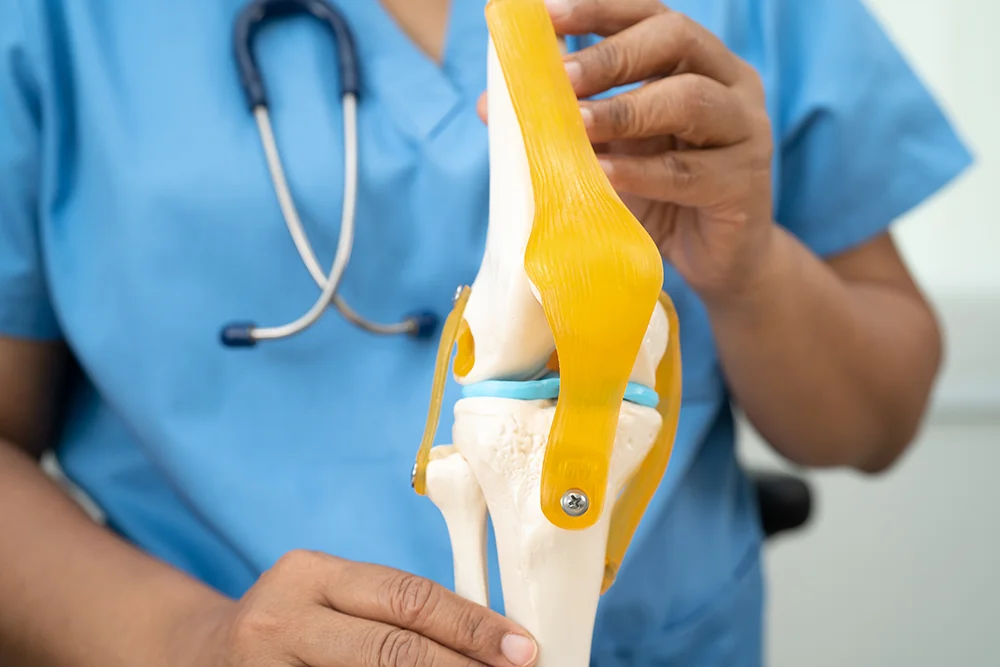
Whenever possible, Dr Lawyer performs meniscal repair rather than removal.
Through small arthroscopic incisions, she can:
Repairs require a more careful rehabilitation period than simple trimming, but they help preserve natural knee biomechanics.
For younger, active patients who have lost most or all of a meniscus and have ongoing pain, meniscal allograft transplantation may be an option.
This involves:
Not everyone is a candidate. Factors include age, alignment, cartilage status, ligament stability, and activity level.
AAOS has a patient guide on meniscal transplant surgery: Meniscal Transplant Surgery.
Not necessarily. But preserving meniscus tissue where possible can help protect cartilage. Your long-term outlook depends on many factors, including alignment, previous injuries, and activity load.
No. A transplant replaces the missing meniscus, not the entire joint. It’s often considered in younger patients as a joint-preserving option.
This varies by tear pattern and associated procedures, but many people progress back to sport over 3–6 months with a structured rehab programme.