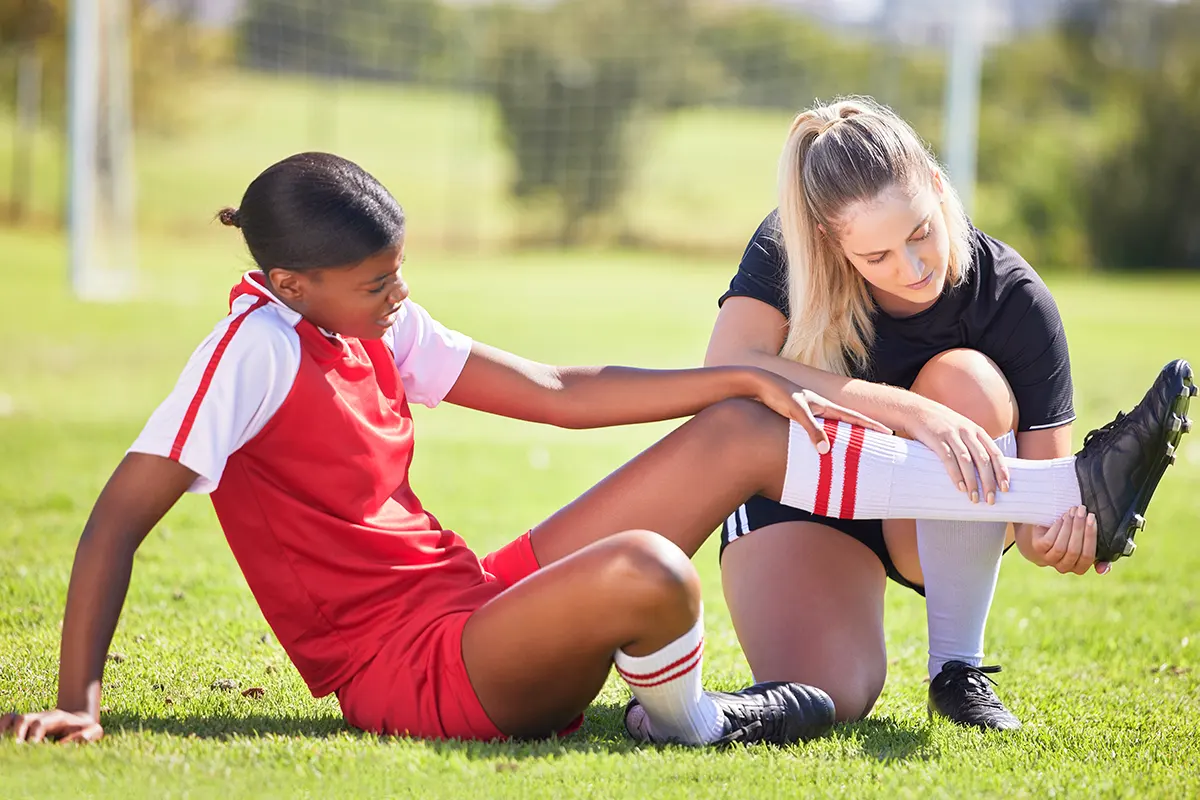
A knee injury can change a season in a single moment.
A young athlete plants to cut, lands from a rebound, turns on a ski edge, or reaches for one more ball. There is a pop, swelling, and that worried look every parent recognizes before anyone says much out loud. Sometimes it is a sprain. Sometimes it is the anterior cruciate ligament, better known as the ACL.
ACL injuries are a major issue in youth sports, and female athletes deserve special attention. Not fear. Not panic. Attention. The right kind can help prevent injuries, catch serious knee problems early, and protect the meniscus and cartilage that matter for long-term joint health.
Dr. Tracye Lawyer is a board-certified, fellowship-trained orthopaedic sports medicine surgeon in Boise. She treats young athletes, active adults, and competitive players with knee, shoulder, and elbow injuries. Her background is not only clinical. She was a two-sport athlete at Stanford, competed in the U.S. Olympic Trials, and built a medical career around sports medicine, ACL reconstruction, meniscus preservation, and cartilage restoration. That mix matters when caring for athletes who want to get back, but need to get back safely.
Why ACL injuries are such a big issue in young athletes
The ACL helps stabilize the knee during cutting, pivoting, landing, and sudden deceleration. Those movements show up in almost every sport Idaho families know well: soccer, basketball, volleyball, skiing, lacrosse, football, gymnastics, and track events with jumping or landing demands.
The hardest part is that many ACL tears happen without contact. No tackle. No collision. Just a plant, twist, landing, or awkward change of direction.
For young athletes, the injury is more than a medical diagnosis. It can mean time away from sport, school routines, teammates, college recruiting goals, and confidence. It can also involve damage to the meniscus or joint cartilage. That is why early evaluation matters. The ACL is important, but the whole knee is the story.
Why female athletes can have higher ACL risk
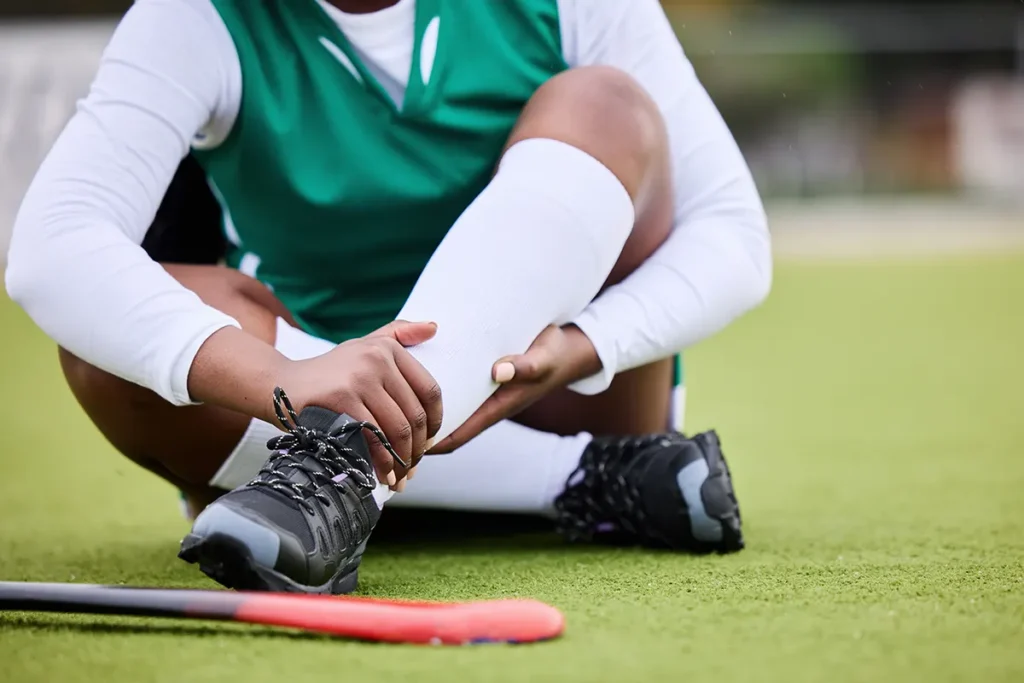
Female athletes do not tear ACLs because they are fragile. They tear ACLs because several risk factors can line up at once, especially during adolescence.
Some factors cannot be changed. Anatomy can play a role, including knee alignment, ligament size, and the shape of the joint. Hormonal changes may also influence ligament laxity in some athletes. Growth and maturation matter too. Teenage athletes can grow quickly while strength, control, and coordination are still catching up.
Other factors can be trained. This is where prevention becomes useful.
Many female athletes land or cut with the knee drifting inward, the trunk leaning, or the hips and hamstrings under-recruited. They may rely heavily on the quadriceps and not enough on the posterior chain. Fatigue makes this worse. So does year-round competition without enough strength work.
The encouraging part is that these patterns are not fixed. Athletes can learn better landing, cutting, balance, hip control, and deceleration mechanics. Coaches can build those habits into warm-ups. Parents can support programs that value strength and recovery as much as games and tournaments.
Sports where ACL injuries often happen
ACL tears can happen in many sports, but they are especially common in activities that involve speed, jumping, landing, twisting, and quick changes of direction.
Soccer
Soccer is one of the classic ACL-risk sports for girls. Cutting, defending, shooting, and landing after challenges all place rotational force through the knee. Fatigue near the end of halves can make mechanics sloppier.
Basketball
Jumping and landing are constant in basketball. A player may land from a rebound, stop suddenly on a fast break, or pivot while the foot sticks to the court.
Volleyball
Volleyball brings repeated jumping, blocking, landing, and quick defensive reactions. The risk often comes from landing mechanics, not just the jump itself.
Skiing
In Idaho, skiing deserves its own mention. ACL injuries can occur when the ski catches, the body rotates, or a fall places twisting force through the knee.
Lacrosse, football, gymnastics, and track
Any sport that combines speed, cutting, landing, or sudden deceleration can load the ACL Injuries. The sport matters, but the movement pattern often matters more.
Warning signs after a knee injury
Parents and coaches do not need to diagnose an ACL tear on the sideline. They do need to know when to stop guessing.
A suspected ACL injury may involve:
- A pop at the time of injury
- Rapid swelling, often within a few hours
- Pain deep in the knee
- Trouble walking normally
- A sense that the knee buckles or gives way
- Loss of confidence with turning or changing direction
- Difficulty fully straightening or bending the knee
Not every athlete has every symptom. Some can walk off the field and still have a serious ligament injury. That is why swelling and instability deserve respect.
If the knee swells quickly after a twist or landing, it should be evaluated.
What parents should do after a suspected ACL tear
First, stop play. Letting an athlete “test it” after a pop and swelling is not worth the risk.
In the first day or two, focus on calming the knee. Use ice, compression, elevation, and protected walking if needed. If your child is limping badly, crutches may be appropriate until they are assessed. Avoid aggressive stretching, deep squats, running, cutting, or trying to prove the knee is fine.
The next step is a proper evaluation. That usually includes a history, exam, X-rays when needed, and often an MRI if the story suggests ACL, meniscus, or cartilage injury.
Parents often ask, “Can we wait a few weeks and see?” Sometimes yes, but not if the knee is swollen, unstable, locked, or repeatedly giving way. Delays can matter, especially if the meniscus is involved. A repairable meniscus tear is something we want to identify before it becomes a bigger problem.
Can ACL injuries be prevented?
Not every ACL injury can be prevented. Sport carries risk. But many non-contact ACL injuries are connected to movement patterns, fatigue, strength gaps, and poor landing mechanics. Those are trainable.
The best prevention programs for ACL Injuries are simple enough to happen consistently. They do not need fancy equipment. They do need buy-in.
A good program usually includes:
- Dynamic warm-ups
- Balance and single-leg control
- Hip and core strengthening
- Hamstring and glute work
- Jumping and landing practice
- Cutting and deceleration mechanics
- Coaching cues for knee position and trunk control
The key is consistency. A prevention warm-up done two or three times a week can be more useful than a perfect program nobody has time to run.
What neuromuscular training means in plain English
“Neuromuscular training” sounds more complicated than it is.
It means teaching the brain, nerves, and muscles to work together during sport movements. In real life, that means helping an athlete land softer, keep the knee from collapsing inward, use the hips better, stay balanced, and control speed before changing direction.
Think of it as better brakes, better steering, and better suspension.
For a young soccer player, it might mean learning how to decelerate before cutting. For a basketball player, it might mean landing from a rebound with knees bent, hips loaded, and feet controlled. For a volleyball player, it might mean avoiding stiff-legged landings when tired.
These drills should not feel like punishment or extra conditioning tacked on at the end. They work best as part of a warm-up before practice and games, when athletes are fresh enough to learn.
ACL injuries reconstruction, meniscus protection, and cartilage preservation
When a young athlete has a complete ACL tear and wants to return to cutting or pivoting sports, ACL reconstruction is often recommended. The goal is to restore stability, reduce giving-way episodes, and protect the rest of the knee.
But ACL surgery is not just about the ligament.
The meniscus acts like a shock absorber. The cartilage lining the joint allows smooth motion. When the knee is unstable, both can be injured. Dr. Lawyer’s approach places strong emphasis on preserving these structures whenever possible.
That may mean repairing the meniscus rather than removing tissue when the tear pattern allows it. It may mean adjusting the rehab timeline to protect a repair. It may mean discussing cartilage restoration if an athlete has a focal cartilage injury. These decisions are not one-size-fits-all. They depend on age, sport, anatomy, injury pattern, goals, and long-term joint health.
A typical return to cutting and pivoting sports after ACL reconstruction is often in the 9 to 12 month range. Some athletes need longer. The date on the calendar matters less than the testing: strength, balance, landing control, hop testing, confidence, and sport-specific readiness.
Returning too early is one of the easiest ways to turn one injury into two.
Dr. Lawyer’s athlete-to-surgeon perspective
There is a difference between knowing sport from the textbook and knowing what it feels like to compete.
Dr. Lawyer was a Stanford athlete, a national champion in the heptathlon, a high-level soccer player, and a U.S. Olympic Trials competitor. She understands the urgency young athletes feel. She also understands the pressure parents feel when a season, scholarship path, or team role seems to be slipping away.
That lived experience does not make the decision emotional. It makes the conversation honest.
The goal is not to rush an athlete back to look successful on paper. The goal is to help her return with a stable knee, stronger mechanics, better confidence, and a plan that protects the next season, not just the next game.
What coaches can do this season
Coaches have enormous influence. A few minutes before practice can change how athletes move.
Start with a consistent neuromuscular warm-up. Watch landings. Cue athletes to bend at the hips and knees, keep the knee tracking over the foot, and avoid stiff, upright landings. Build in single-leg balance, controlled hops, lateral movement, and deceleration drills.
Do not treat strength training as optional for girls. Female athletes deserve the same access to strength and conditioning support as male athletes. Strong hips, hamstrings, calves, and core muscles are not just performance tools. They are injury-prevention tools.
Also, pay attention to fatigue. When athletes are tired, knees drift, landings get loud, and decisions slow down. That is often when injuries happen.
What parents can do at home
Parents do not need to become trainers. They can help by noticing patterns.
Is your athlete playing the same sport year-round without a break? Is knee pain being normalized because everyone on the team is sore? Is there any strength work, or only games and practices? Is the athlete sleeping enough? Eating enough? Getting time to recover?
Encourage your child to speak up early. Pain is not weakness. Swelling is not drama. Instability is not something to push through.
The best sports culture is not the one that ignores injuries. It is the one that handles them early and intelligently.
When to schedule an evaluation
For a young athlete with knee pain, swelling, or instability, schedule an evaluation. It is especially important after a pop, rapid swelling, a twisting injury, or any knee episode that makes the athlete feel unsafe changing direction.
Seeing an orthopaedic sports medicine surgeon does not automatically mean surgery. It means you get a clear diagnosis, a thoughtful plan, and guidance that protects both the athlete’s current season and her long-term knee health.
If your daughter or young athlete has knee pain, swelling, or instability after sport, schedule an evaluation with Dr. Tracye Lawyer in Boise. Early answers can protect the ACL, meniscus, cartilage, and confidence that young athletes need to keep moving.
Learn more
Dr. Tracye Lawyer is a fellowship-trained surgeon in Boise, working alongside Dr. Kaitlin Neary to provide Idaho athletes with the most advanced sports medicine and orthopedic care available – Catalyst Orthopaedics.
FAQs
Why are ACL injuries common in female athletes?
Female athletes may face a combination of anatomy, hormones, biomechanics, neuromuscular control, fatigue, and training-access factors. Many of the movement-related risks can be improved with proper strength and neuromuscular training.
What sports have the highest ACL risk for girls?
Soccer, basketball, volleyball, skiing, lacrosse, gymnastics, and other cutting or landing sports can carry ACL risk. The risk is highest when the sport involves pivoting, jumping, landing, or sudden deceleration.
What are the warning signs of an ACL tear?
A pop, rapid swelling, instability, trouble walking, loss of motion, and difficulty trusting the knee after a twist or landing are warning signs. A swollen knee after sport should be evaluated.
Can ACL injuries be prevented?
Not all ACL injuries can be prevented, but neuromuscular training can reduce risk. These programs teach safer landing, cutting, balance, strength, and body control.
How long does return to sport take after ACL reconstruction?
Many athletes return to cutting and pivoting sports around 9 to 12 months after ACL reconstruction, but the timeline depends on healing, strength, movement testing, confidence, and any meniscus or cartilage injury.
Why is meniscus preservation important with ACL injuries?
The meniscus helps absorb shock and protect cartilage. Preserving or repairing the meniscus when possible may help protect long-term knee health.
Disclaimer
This information is for general education and is not a substitute for medical advice. Every treatment has risks and trade-offs. Talk with your orthopaedic surgeon about your specific diagnosis, health history, imaging, and goals.