A rotator cuff repair is designed to restore more than a tendon. For active patients, it is an investment in reaching overhead without pain, lifting at work with confidence, sleeping comfortably, and getting back to sport or recreation. Understanding rotator cuff repair recovery milestones helps you recognize steady progress while respecting the healing that must happen beneath the surface.
The central challenge is that pain and mobility can improve before the repaired tendon is ready for force. Feeling better is encouraging, but it is not a signal to test the repair. A successful recovery balances appropriate movement with deliberate protection, using therapy and follow-up visits to guide each next step.
The first 6 weeks: Protect the repair
In the early phase of rotator cuff repair recovery, the repaired tendon needs time to reconnect securely to the bone. Most patients wear a sling, often with an abduction pillow, for about four to six weeks. Your exact plan depends on the size and pattern of the tear, tissue quality, the repair technique, and whether other procedures were performed at the same time.
Pain and swelling are usually most noticeable during the first several days, then gradually become easier to manage. Ice, prescribed or recommended medications, comfortable positioning, and following sleep instructions can make a meaningful difference. Many patients find sleeping in a recliner or with carefully arranged pillows more comfortable at first.
During this period, avoid actively lifting the surgical arm away from your body, reaching suddenly, pushing yourself up from a chair with that arm, or carrying items in that hand. These everyday movements can place more load on the repair than patients realize. The sling is not simply a reminder that surgery occurred. It is a protective tool while the tendon begins its healing process.
Physical therapy may begin with gentle, therapist-guided passive range-of-motion exercises. Passive means the shoulder is moved without the repaired rotator cuff doing the work. Depending on your surgeon’s protocol, therapy may also include elbow, wrist, hand, neck, and posture exercises to maintain comfortable movement elsewhere.
A useful early benchmark is not a certain degree of motion. It is the ability to protect the repair consistently while pain gradually settles and passive motion improves without sharp pain or a prolonged flare afterward.
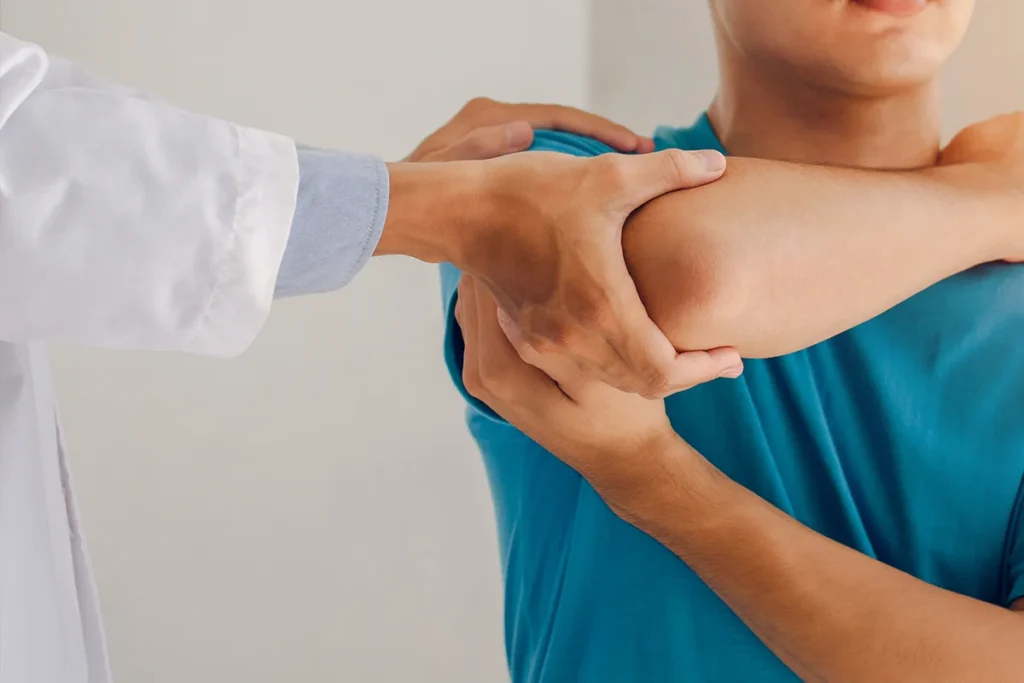
Rotator cuff repair recovery milestones at 6 to 12 weeks
Around six weeks, many patients are cleared to begin transitioning out of the sling. This can feel like a major turning point, but the shoulder is still healing. The tendon has not yet regained normal strength, and lifting a bag, catching a falling object, or using the arm to pull open a heavy door can still be risky.
Therapy typically progresses from passive motion to active-assisted motion, then to active motion. Active-assisted exercises use help from the other arm, a therapist, or an approved tool. Active motion means the shoulder begins moving under its own power, generally without resistance.
This phase often brings mixed emotions. You may have less pain, but the arm can feel weak, stiff, awkward, or easily fatigued. That is expected. The muscles have been protected and may not yet coordinate normally. Progress is rarely perfectly linear, particularly after therapy sessions or an unusually active day.
For many patients, the important goals between weeks 6 and 12 are restoring comfortable daily movement, improving shoulder mechanics, and avoiding compensations such as shrugging the shoulder toward the ear. Your care team may adjust exercises if stiffness is limiting progress, but pushing aggressively through pain is not always the answer. A shoulder that has had a large tear or a more complex repair may need a slower timeline than a smaller, straightforward tear.
Desk work may be possible earlier if the arm can remain protected and the job does not require lifting, repetitive reaching, driving long distances, or sudden movement. Physically demanding work usually requires more time and a more specific return-to-duty plan.
Months 3 to 5: Build control before strength
At roughly 12 weeks into rotator cuff repair recovery, many patients begin more focused strengthening, provided their motion, symptoms, and surgical findings support that progression. This is when the shoulder starts to feel more functional, but it is also a phase when impatience can lead to setbacks.
Strengthening commonly begins with low-load exercises that target the rotator cuff, shoulder blade muscles, and the muscles that support posture and overhead mechanics. The goal is not simply to make the shoulder stronger. It is to help the shoulder move efficiently, with the ball of the joint centered and the shoulder blade contributing in the right way.
Activities such as light household tasks, driving, and waist-level lifting often become easier during this period. Overhead work, heavy lifting, repetitive throwing, and high-impact activities may still be restricted. A patient returning to ranch work, construction, climbing, skiing, or competitive sport needs more than basic range of motion. They need the strength, endurance, balance, and reaction time to meet the demands of that specific activity.
Soreness after exercise can be normal, especially as strengthening begins. Pain that is sharp, increasingly intense, associated with a sudden loss of function, or still significant the next day deserves a call to your surgical team. A thoughtful adjustment to activity is often more productive than trying to push through a concerning symptom.
Months 5 to 8: Return to higher-demand activity
By five to six months, many patients have regained substantial motion and strength. This is often when recreational athletes begin sport-specific drills and active professionals begin preparing for higher-demand job tasks. However, return-to-sport and return-to-work clearance should be based on more than the calendar.
Your surgeon and therapist may consider range of motion, strength compared with the other side, shoulder control, endurance, pain response, and the demands of your activity. A golfer may progress differently than a tennis player. A trail rider has different requirements from a swimmer, and a warehouse employee faces different loads than someone returning to computer-based work.
Throwing, contact sports, heavy overhead lifting, and repetitive overhead work often require a longer progression. For some patients, full return is appropriate around six months. For others, particularly after a large or revision repair, the timeline may extend toward eight to 12 months. That is not a failure of recovery. It is an informed decision to prioritize durable healing over a rushed return.
What can change the rotator cuff repair recovery timeline?
No two repairs are identical. A small tear repaired in healthy tissue may follow a different course than a large retracted tear, a revision surgery, or a repair combined with biceps treatment or other shoulder procedures. Age, smoking or nicotine use, diabetes, nutrition, sleep, job demands, and consistency with rehabilitation can also affect recovery.
Stiffness is another variable. Some stiffness is common early on and may improve as healing advances. In other cases, it may require a more individualized therapy plan. The best approach is not automatically faster or slower. It is the approach that protects the repair while addressing the limitation in front of you.

Signs to contact your care team
Contact your surgeon’s office promptly if you develop fever, drainage, worsening redness around the incision, significant swelling, new numbness, or pain that is escalating rather than improving. A sudden pop followed by marked weakness or loss of function also warrants evaluation. These symptoms do not always mean the repair has failed, but they should not be dismissed.
At Catalyst Orthopaedics with Dr. Tracye Lawyer MD, PhD, recovery planning is built around the activities that matter to each patient, whether that means returning to the gym, the trail, the field, or a physically demanding job. The goal is not merely to get through rehabilitation. It is to restore a shoulder that can support the life you want to lead.
Treat each milestone as a checkpoint, not a finish line. Consistent therapy, protected progression, and clear communication with your care team give your repaired shoulder the best opportunity to heal well and stay strong for the miles, lifts, reaches, and moments ahead.
You can request an appointment here:
Appointments with Dr Tracye Lawyer